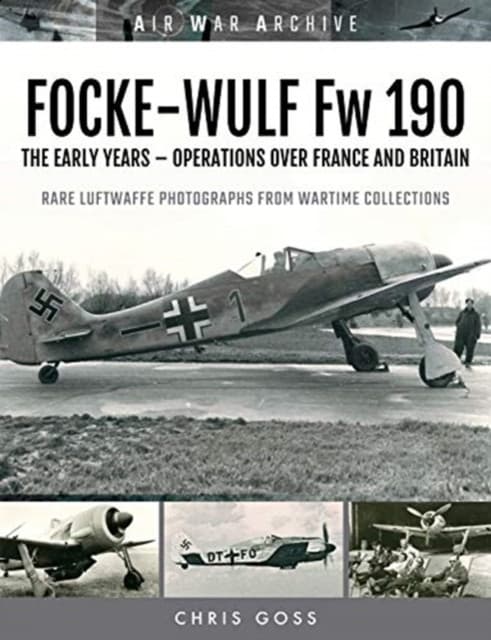
As the Battle of Britain came to a close, the Luftwaffe began arming its single-engined fighters with bombs, using them in preference to twin-engined bombers against many daylight targets. Two units were designated for these Jagdbomber (literally fighter-bomber) attacks - 10/JG 2 and 10/JG 26. Their targets including shipping and coastal installations, railways, gas holders and selected military and civilian objectives. The detrimental affect on British morale caused by these 'Tip and Run' attacks was great.
How could the British military combat the raids effectively? How could the local population cope? Questions were asked in Parliament by no effective answer supplied. The locals lived in fear. Where and when would the next attack occur?
Luftwaffe Fighter-Bombers over Britain analyses the campaign from March 1942-June 1943 using contemporary records and first hand accounts from both the German and British sides and highlighting, amongst others, unopposed attacks on London, Bexhill, Eastbourne, Hastings, Yeovil, Salisbury, the Isle of Wight, Great Yarmouth, Torquay and Bournemouth. Tactics are considered from both attacker and defender viewpoints, their successes and their failures.
Incorporating almost 300 previously unpublished photographs, and packed with detailed research, Luftwaffe Fighter-Bombers over Britian tackles a previously little known aspect of the World War II air war and will appeal to those experiencing the raids, those with an interest in local history, and military researcher and aviation historian.